


The Challenge
As offshore wind turbines continue to increase in size, the requirements for flange flatness become increasingly demanding. For Vestas’ 15 MW V236 turbines, tower flange diameters now exceed 7.5 meters, making it difficult to consistently achieve the required tolerances using traditional manufacturing methods.
Welcon, one of Europe’s leading tower manufacturers, required a solution capable of delivering tighter tolerances, improving production consistency, and reducing reliance on heat straightening as a corrective process.
The Solution
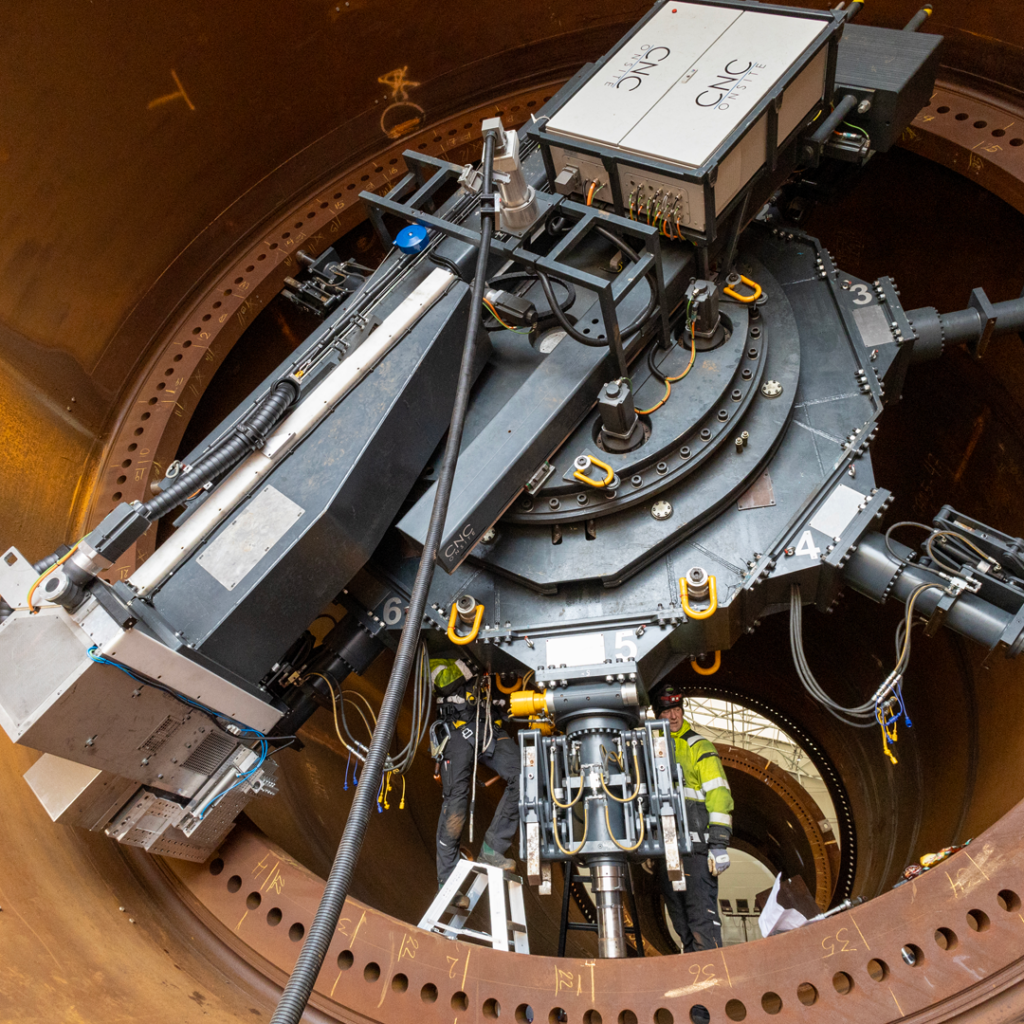
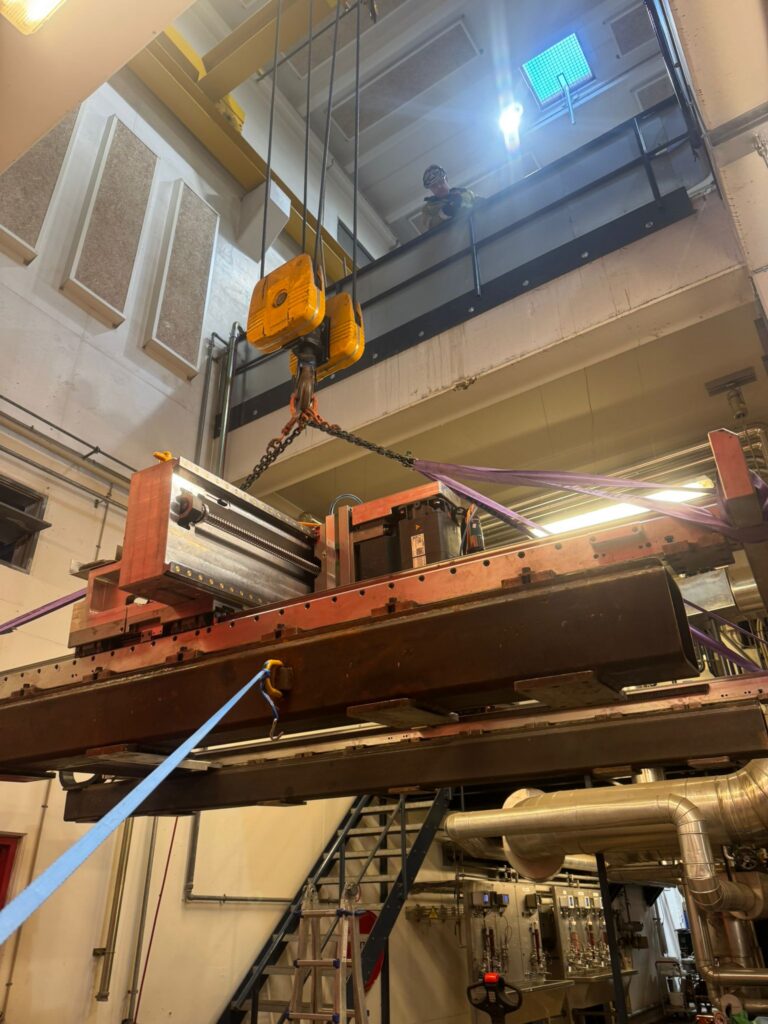
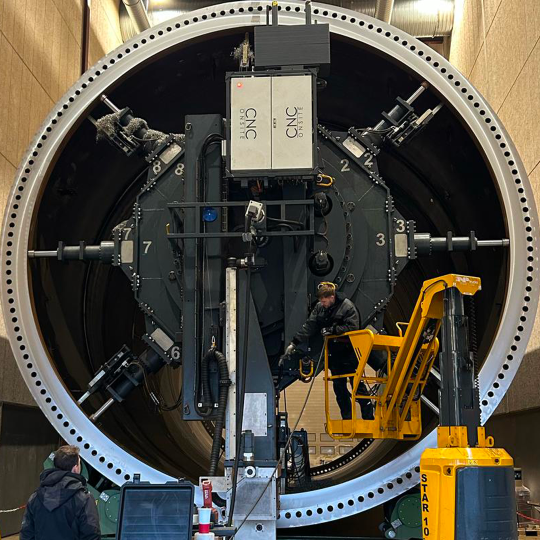
To address this challenge, Welcon implemented CNC Onsite’s custom-developed Goliath flange milling machine as part of the production process for 97 bottom tower flanges destined for offshore wind projects in Germany and the Netherlands.
Mounted directly onto the flange, Goliath performs fully CNC-controlled precision milling, creating a flat and uniform contact surface between tower and transition piece flanges.
By replacing heat straightening with precision machining, Welcon gained a controlled and repeatable process capable of delivering consistent results across large-diameter offshore flanges.
The Results
The first flange achieved a global flatness of just 0.21 mm, significantly outperforming the project requirement of 1.0 mm and demonstrating the machine’s ability to deliver precision well beyond conventional industry standards.
Key outcomes included:
- Global flatness of 0.21 mm on a 7.5-meter flange
- 79% improvement compared to the required tolerance
- Elimination of heat straightening as a post-production process
- Improved quality control through a repeatable machining process
- Increased flexibility in future flange and bolt designs
- Reduced need for costly flatness measurements and corrective actions
- Improved conditions for achieving correct bolt preload throughout the flange connection
Perspectives
CNC Onsite
“On the first flange, we have achieved a global flatness tolerance of 0.21 mm. The required 1 mm for this project is already well below the common industry standard of 2.5 mm, so we are of course very pleased with the machines’ performance.
Ensuring a tolerance of 1 mm or better is a significant benefit when it comes to ensuring correct bolt tightening. With 160 bolts in a flange, reducing maintenance costs and downtime due to loose bolts, is a considerable cost saver.”
– Søren Kellenberger, Sales Director and Partner, CNC Onsite
Welcon
“The industry demand for fine tolerances is increasing. To meet flatness requirements, we need a machine-based process, as heat straightening cannot achieve the necessary precision. We also expect this to improve health and safety by eliminating manual work.”
– Johnny Hauggaard Skov, Vice Director, Welcon
Vestas
“If applied throughout the industry on all flanges, from tower to transition piece, I believe this precision milling will offer a range of benefits. When all flanges are completely flat, it eliminates the costly measurements we have seen both at sea and prior to shipping. It will also provide design freedom, including the option of smaller and even maintenance-free bolts.”
– Peter Sigfred Mortensen, Senior Specialist, Offshore Tower Structure, Towers R&D, Vestas
Long-Term Value
As flange diameters continue to increase, achieving tight and repeatable tolerances becomes increasingly difficult using traditional manufacturing methods.
The implementation of Goliath demonstrates how precision machining can replace corrective post-processing, creating a more controlled production process while improving flange quality, bolt performance, and long-term structural reliability.
For manufacturers of offshore wind structures, this represents a shift from correction-based production to precision-based production, delivering measurable benefits throughout both manufacturing and operational life.